
The short answer
A new AC is worth considering when your current system has a major failure, needs frequent repairs or never kept the house comfortable. We size the system to your home, check ducts and electrical, explain the options including heat pumps, and install it with a full startup test.
Putting in a new air conditioner is a decision you live with for a long time, so it pays to get the details right the first time. The equipment matters, but so do the load calculation, the ductwork, the electrical supply and where the outdoor unit sits on the lot. EliteFlow HVAC Repair Service plans and installs central air systems, heat pumps and ductless mini-splits for homeowners in Danville, Blackhawk, Diablo, San Ramon, Pleasanton and the surrounding area. Below we cover when installation makes sense, how we evaluate a house before quoting, the main system choices, the factors behind the price, and the steps from first visit to final startup.
When a new system is the right call
Not every struggling air conditioner needs replacing, and we will tell you when a repair is the smarter move. Installation tends to make sense in a few situations:
- The compressor or outdoor coil has failed on an aging unit and the repair would be a large share of a new system
- Repairs have stacked up over the last couple of summers and the next one is easy to predict
- The system uses an older refrigerant that is getting scarce and costly to service
- Some rooms have always been too hot, suggesting the original equipment or ducts were never sized well
- The house has no central cooling at all, common in older homes built when summers felt manageable without it
- You are remodeling or adding space and the existing system will not cover the new square footage
How we evaluate your home before quoting
A replacement sized by matching the old unit's label can repeat the original mistake. Instead, we look at the house itself: square footage, ceiling heights, window area and orientation, insulation levels and how much afternoon sun the west-facing rooms get. That information goes into a load calculation that tells us how much cooling the home actually needs.
Next comes the ductwork. We inspect accessible runs for leaks, crushed sections and missing insulation, and check whether the return air path is large enough for the new equipment. A high-efficiency system connected to undersized or leaky ducts will never perform the way its rating suggests.
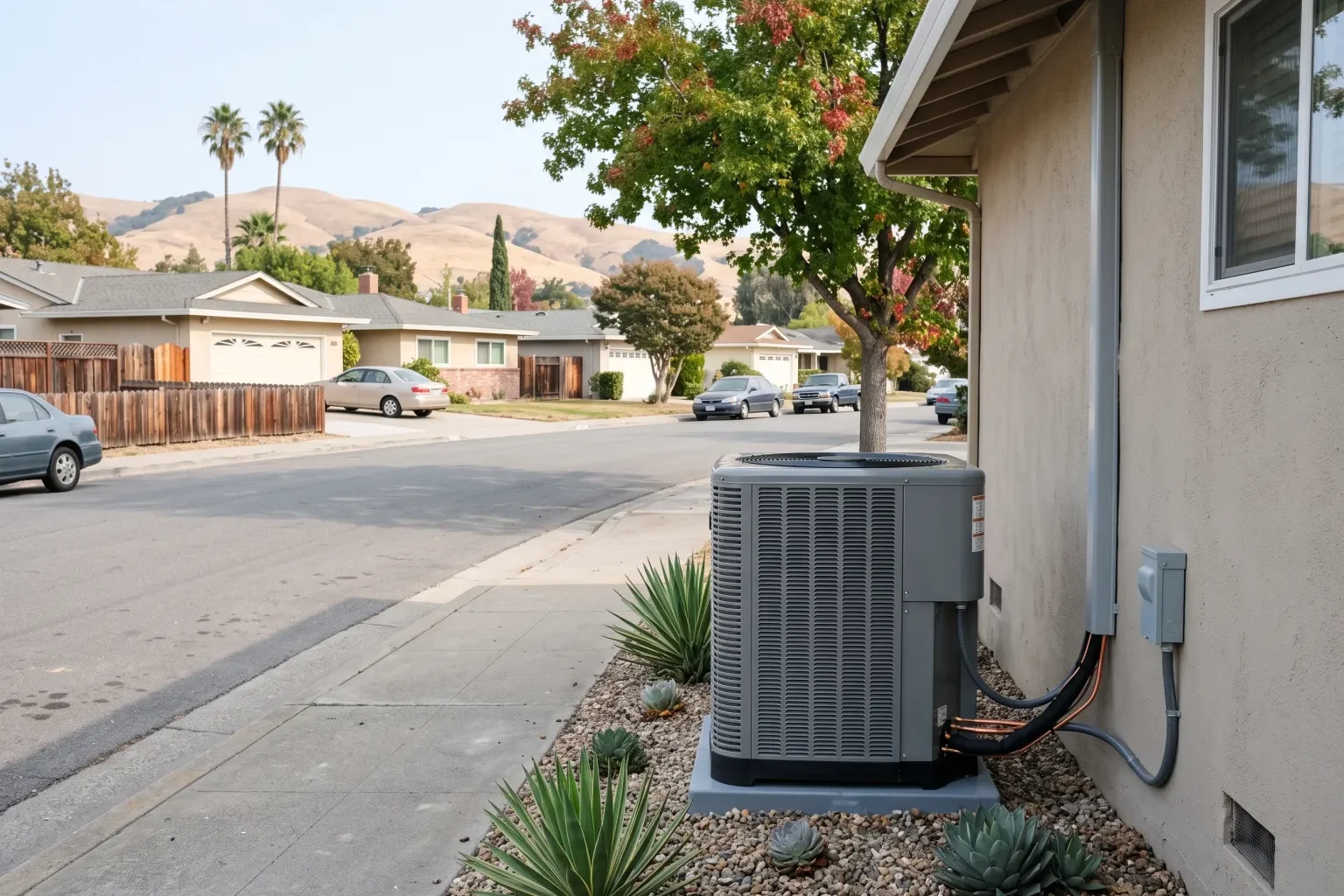
We also confirm the electrical panel has capacity, look at the condensate drain route, and talk with you about where the outdoor unit should go. Noise toward a bedroom window or a neighbor's patio, clearance for airflow and access for future service all factor in.
Choosing between system types
Most homes in the area end up choosing among three main options, and each fits a different situation.
A standard central air conditioner pairs with your existing furnace and ductwork. It is a familiar choice when the furnace still has life left and you want to keep gas heat for now.
A heat pump replaces the outdoor AC unit with one that both cools and heats. Many homeowners consider it because gas furnaces manufactured from 2029 must meet a zero-NOx standard under Bay Area Air District rules, which steers future furnace replacements toward electric options. That rule does not force anyone to remove working equipment, but planning for it now can avoid a rushed decision later. Heat pumps can be paired with an existing furnace as backup or used as the main heat source.
Ductless mini-splits suit homes without ducts, additions, converted garages and rooms the central system never reached well. Each indoor head controls its own zone.
On incentives: the federal 25C credit applied only to qualifying heat pumps placed in service before December 31, 2025, so it does not apply to installations now. BayREN and local clean energy providers sometimes fund heat pump incentives, and we confirm the current offer before counting it.
What drives the installation price
Your written quote will reflect the specific house, but these are the main variables:
- System type and capacity, plus the efficiency rating you choose
- Whether ducts can be reused, need sealing and repair, or must be replaced
- Electrical work, such as a new circuit, disconnect or panel upgrade
- Placement of the outdoor unit, including pads, line set length and wall penetrations
- Attic or crawlspace access for the indoor coil or air handler
- Permits and the inspection your city requires
From first visit to final startup
It starts with the in-home evaluation described above. You then receive a written proposal that spells out the equipment, any duct or electrical work and what is included, with more than one option where it makes sense. Once you choose, we handle the permit and schedule the install.
On installation day, the crew protects floors and work paths, removes the old equipment, sets the new indoor and outdoor components, and connects refrigerant lines, wiring and drainage. After pressure testing and evacuating the lines, we charge the system and run it through a full startup, checking pressures, temperature drop and airflow at the registers. We show you how to use the thermostat, explain filter changes and leave you with the paperwork. The city inspection follows, and we coordinate that visit with you.
AC Installation by city
- AC Installation in San RamonLocal service & repairs
- AC Installation in DublinLocal service & repairs
- AC Installation in PleasantonLocal service & repairs
- AC Installation in ClaytonLocal service & repairs
- AC Installation in Walnut CreekLocal service & repairs
- AC Installation in LivermoreLocal service & repairs
- AC Installation in MoragaLocal service & repairs
- AC Installation in LafayetteLocal service & repairs
- AC Installation in ConcordLocal service & repairs
- AC Installation in AntiochLocal service & repairs
- AC Installation in Pleasant HillLocal service & repairs
- AC Installation in BrentwoodLocal service & repairs