
The short answer
For San Ramon homes, a new air conditioner should be designed around the house layout, especially upstairs heat in two-story homes. We size from a load calculation, review ducts and zoning, handle Contra Costa permitting, and commission the system before we leave.
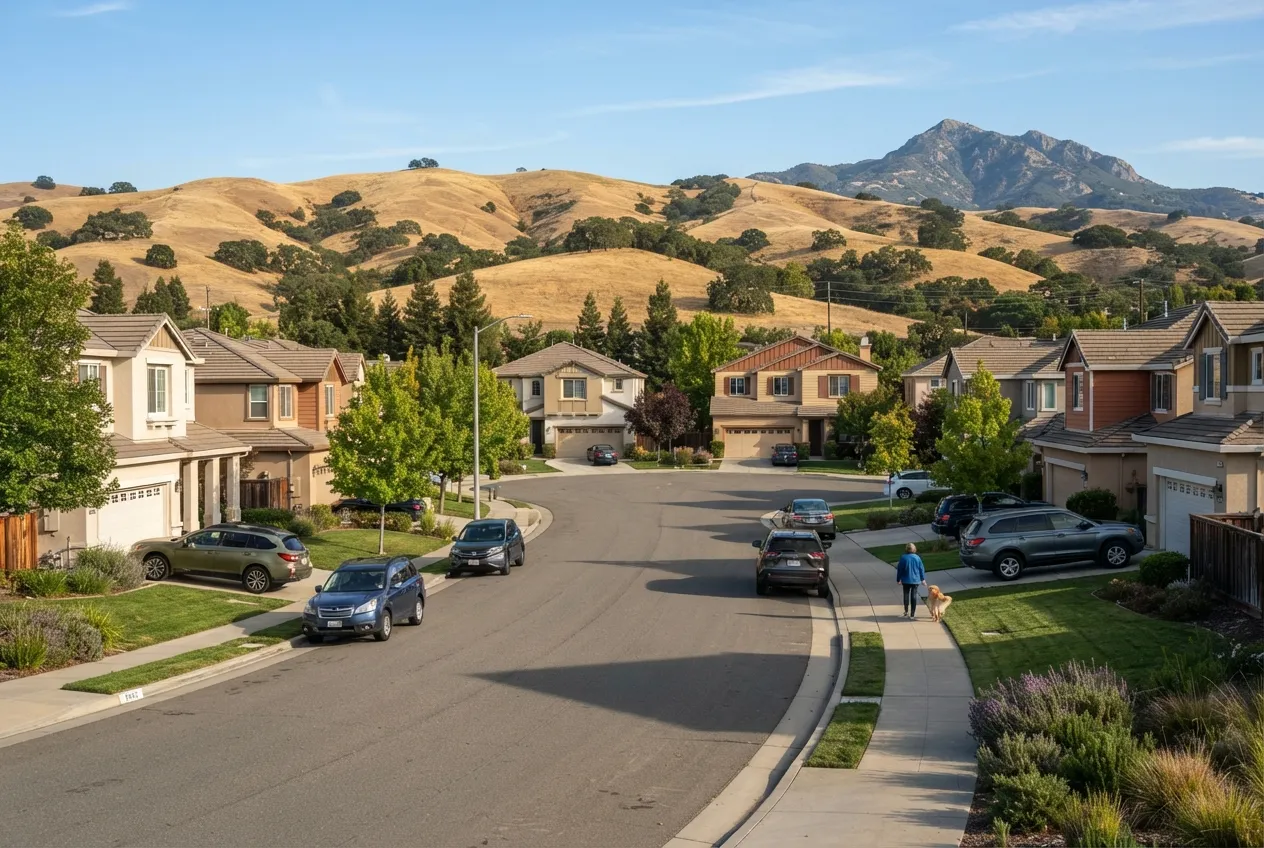
San Ramon is practically next door to us. Our Danville shop is only about two miles away, which means installation crews can be in a 94582 or 94583 driveway shortly after the workday starts and spend their hours on the job instead of in traffic. The city has a wide mix of housing: split-levels and ranch homes from earlier decades, plus many larger two-story houses built more recently. That variety matters for cooling. A two-story home with an upstairs bonus room needs a very different setup than a single-level house with a low attic, and getting the design right at installation is far easier than fixing comfort complaints afterward.
The Two-Story Problem
Ask almost any owner of a two-story San Ramon house about summer and they will describe the same thing: the downstairs is fine, but the bedrooms upstairs stay warm well into the night. Heat rises, the upstairs ducts usually run through the hottest part of the attic, and a single thermostat in the downstairs hallway has no idea what is happening above it.
A new system is the right moment to address that. Depending on the home, the answer might be a zoning system with motorized dampers and a second thermostat, a separate smaller system dedicated to the upper floor, better return air from the bedrooms, or sealing and insulating the attic ducts. We look at the house before suggesting any of these, since adding hardware does not help if the underlying airflow is poor.
Sizing That Starts With the House
Replacing an old unit with one of the same tonnage seems logical, but the original might have been sized by rule of thumb, and the house may have changed since then with new windows, added insulation or a remodel. We run a load calculation that accounts for each room's exposure and construction, and we use the result to select equipment.
An air conditioner that matches the load runs longer, quieter cycles, removes more moisture and avoids the temperature swings that oversized equipment causes. It also puts less stress on parts over time.
Equipment Options We Install
Every home and budget is different, so we offer several paths and explain the trade-offs of each:
- Single-stage central air paired with your existing furnace, for a straightforward and reliable setup
- Two-stage or variable-speed systems, which run at low output most of the time for steadier temperatures and quieter operation
- Heat pumps that replace both the AC and the furnace with one outdoor unit
- Ductless mini-splits for bonus rooms, garage conversions or additions that the main ducts never reached
- Zoning controls that let upstairs and downstairs run on separate schedules
Thinking About Heating While You Are At It
Since the furnace and air conditioner share the same blower and ducts, it makes sense to consider them together. If your furnace is relatively new, a matched AC and coil is usually all you need. If it is older, it is worth knowing that Bay Area Air District Rule 9-4 sets a zero-NOx standard for gas furnaces manufactured from 2029. Working furnaces are not affected; the rule applies when a furnace is replaced.
Some San Ramon owners choose a heat pump now so they will not face a separate heating decision later. Incentives through BayREN or local clean energy providers may be available for heat pumps, and we check current offers before quoting. The federal 25C credit ended for heat pumps placed in service after December 31, 2025.
How the Install Is Done
We pull the Contra Costa or city permit, schedule the work and protect floors and stairs. The old equipment is disconnected, its refrigerant recovered, and everything is hauled away. The new condenser sits on a level pad with proper clearance, and the indoor coil is sealed to the air handler.
We evacuate the refrigerant lines, charge the system, and then measure temperature drop, airflow and static pressure. Thermostats are configured and explained, and if zoning is installed, we test each zone separately. The inspection follows, and we are there to meet the inspector when required.
Nearby Communities
In addition to San Ramon, we install cooling systems in Dublin, Pleasanton, Livermore, Walnut Creek and Moraga.
More services in San Ramon
- AC Repair in San RamonLocal service & repairs
- Heating Repair in San RamonLocal service & repairs
- Heat Pump Installation in San RamonLocal service & repairs
- Furnace Repair in San RamonLocal service & repairs