
The short answer
A new AC system in Pleasanton should be sized from a room-by-room load calculation, not from the old unit's label. We check ducts, the electrical panel and outdoor unit placement first, then install, charge and test the system so every room cools evenly through hot valley afternoons.
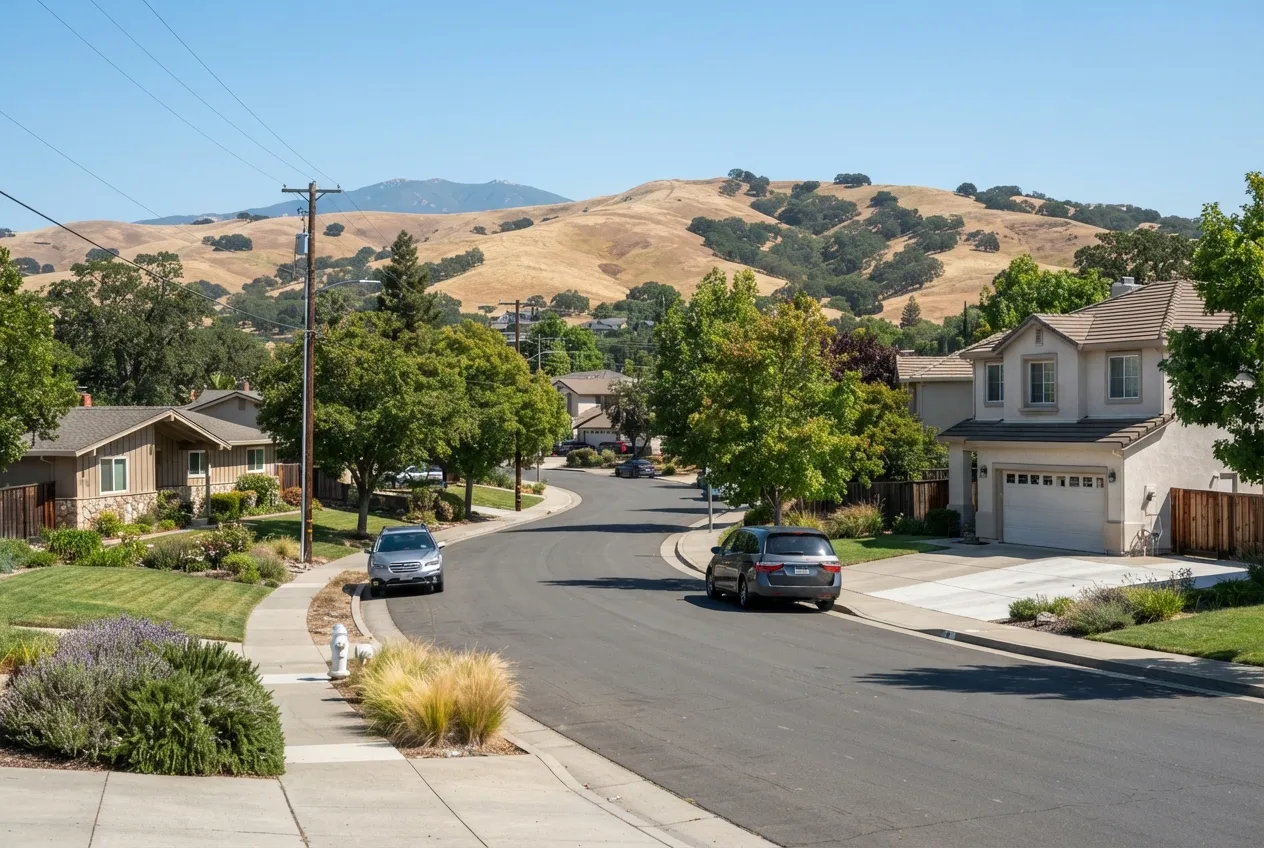
Pleasanton sits on the floor of the Amador Valley, roughly nine miles south of our Danville shop, and summer afternoons there can feel a world away from the cooler shoreline towns. Many houses in the 94566 and 94588 ZIP codes were built with a furnace and ductwork but no cooling at all, or with an early central air unit that has now outlived its parts supply. Adding or replacing air conditioning here is less about picking a brand and more about matching the equipment to the house: how the attic breathes, how the ducts were run, how much west-facing glass the living room has, and how the electrical panel can carry a new load. This page walks through how we plan and install cooling for Pleasanton homes, from the first measurement to the final temperature check at each register.
Why Amador Valley Heat Changes the Plan
Inland Tri-Valley towns warm up quickly once the morning marine layer burns off, and the dry air lets attics bake well past sunset. That pattern puts more strain on an air conditioner than the same house would face closer to the Bay. A system that looks adequate on paper can run for hours without catching up if the ducts sit in a hot attic with thin insulation.
Because of that, we treat attic temperature, duct condition and solar exposure as part of the installation itself. A properly matched unit in Pleasanton should cycle on and off during an ordinary summer day rather than running nonstop, and it should pull enough moisture out of the air to keep the house comfortable even when the thermostat is set a few degrees higher.
What We Measure Before Recommending Equipment
Oversized air conditioners are one of the most common problems we find in replacement jobs. They chill the air near the thermostat, shut off, and leave back bedrooms warm and humid. Undersized units do the opposite and never rest. To avoid both, we gather real numbers from your home before talking about models.
- Square footage, ceiling heights and the direction each major window faces
- Attic and wall insulation levels where we can safely see them
- Duct size, layout, leakage points and the condition of the return air path
- Electrical panel capacity and the existing breaker and disconnect for the outdoor unit
- Where the condenser can sit with good airflow and reasonable distance from bedroom windows
- Whether the furnace or air handler can be reused with a new coil or should be replaced together
Choosing Between Central Air, a Heat Pump or Ductless
For a Pleasanton house that already has a working gas furnace in good shape, a matched central air conditioner and indoor coil is often the simplest path. If the furnace is near the end of its life, it is worth comparing a heat pump, which handles both cooling and heating with one outdoor unit. Bay Area Air District Rule 9-4 means gas furnaces manufactured from 2029 must meet a zero-NOx standard, and that rule only applies when a furnace is replaced, not to working equipment. Some owners decide to plan the heating change now while the cooling is already being installed.
Homes without any ductwork, or additions that were never connected to the main system, can be good candidates for ductless mini-splits. We lay out the trade-offs plainly so you can pick the option that fits the house, the budget and how long you plan to stay.
Installation Day, Step by Step
Most replacement installs are finished within a day, while new systems in homes with no prior cooling can take longer if ducts or a new circuit are needed. We protect flooring along the work path, recover any old refrigerant according to EPA rules, and remove the old equipment from the property.
The new outdoor unit goes on a level pad, the line set is sized and flushed or replaced, and the indoor coil is sealed to the furnace or air handler so conditioned air does not leak into the attic. We pull a deep vacuum on the refrigerant lines before releasing the charge, then fine-tune it with the system running. Before leaving, we measure supply temperatures at the registers, check airflow across the coil, confirm the condensate drain flows freely, and set up the thermostat with you.
Permits, Incentives and Paperwork in Alameda County
Pleasanton requires a mechanical permit for most new or replacement air conditioning work, and we handle the application and the inspection scheduling. California energy code may also call for duct testing when equipment is changed, so we plan time for that rather than surprising you at the end.
If you are considering a heat pump, BayREN and your local clean energy provider sometimes offer electrification incentives. Those programs change by funding cycle, so we confirm what is currently available before including it in any proposal. The federal 25C tax credit covered qualifying heat pumps placed in service before December 31, 2025, and is not available for new installations after that date.
Serving Pleasanton and the Neighboring Valley
Our crews drive down from Danville along the I-680 corridor, so Pleasanton is a regular part of our week, along with Dublin, Livermore and San Ramon. We also take installation calls in Walnut Creek and Moraga. If you are comparing quotes, ask each contractor how they sized the system and whether they inspected the ducts; those two answers say a lot about how the house will feel next August.
More services in Pleasanton
- AC Repair in PleasantonLocal service & repairs
- Heating Repair in PleasantonLocal service & repairs
- Heat Pump Installation in PleasantonLocal service & repairs
- Furnace Repair in PleasantonLocal service & repairs