
The short answer
Call for furnace repair if the burners will not light, the blower runs but the air stays cool, the unit cycles on and off, or you notice odd smells or noises. We test the ignition, safety controls, airflow and venting, then give you a repair-or-replace recommendation before any work begins.
The first cold snap of the season is when many San Ramon Valley furnaces get switched on after months of sitting idle, and it is also when hidden problems come to light. Dust burns off the burners, a weak igniter finally gives up, or a blower motor that limped through last winter refuses to start. EliteFlow HVAC Repair Service diagnoses and fixes gas furnaces for homeowners in Danville, Alamo, San Ramon and neighboring parts of Contra Costa County. Our approach is simple: find the actual cause, explain it in plain terms, and give you a clear choice between repairing the unit and planning for something new. Below we cover the symptoms worth calling about, the parts of the furnace we test on a repair visit, how we think about repair versus replacement, the variables that affect the bill, and how a typical appointment unfolds.
Symptoms that call for a furnace technician
Some furnace problems are obvious, like a house that will not warm up at all. Others are subtle. A system that runs constantly on a forty-degree night, a register that blows lukewarm air, or a thermostat that clicks without anything happening are all worth investigating before a small fault turns into a larger one.
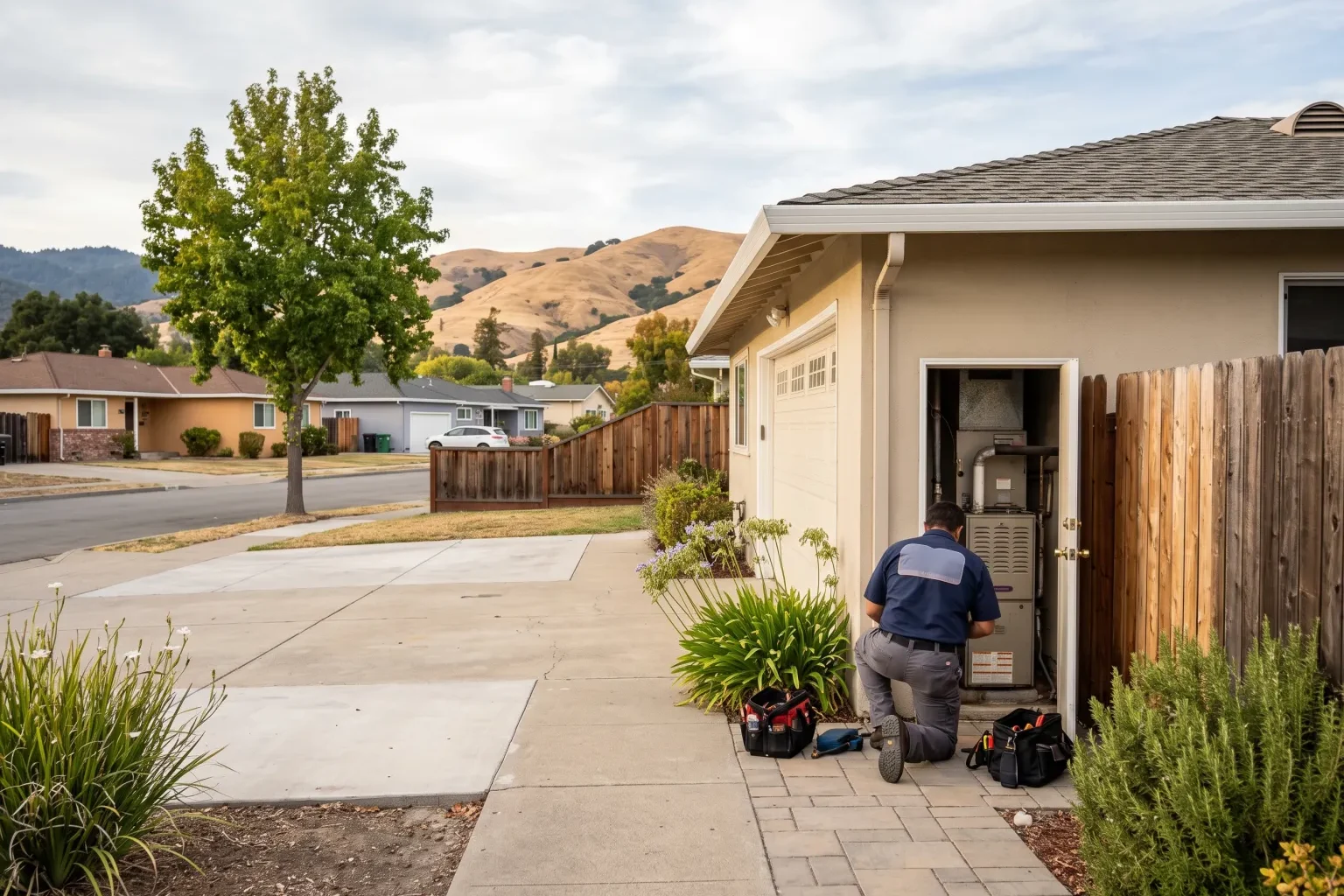
Danville homes often have the furnace in the garage or attic, out of sight and out of mind for most of the year. A quick look before the heating season, at the filter, the area around the unit and the condensate line on high-efficiency models, can reveal trouble early. Storage boxes pushed up against a garage furnace, for example, can restrict combustion air and contribute to the very shutdowns homeowners call us about.
If you smell gas, leave the house and contact your gas utility first. If a carbon monoxide alarm sounds, get everyone outside and call for help. Those situations come before any repair visit.
- No heat, or heat that comes and goes during the cycle
- Clicking, booming on ignition, rattling or a high-pitched squeal
- The blower runs nonstop or never shuts off
- A flashing error code on the control board window
- A tripped breaker or blown fuse each time the furnace starts
- Water around a high-efficiency furnace from a blocked condensate line
- Burning, electrical or musty smells beyond the brief first-start dust odor
The components we test during a repair call
Modern furnaces follow a set startup sequence: the thermostat calls for heat, the inducer fan clears the flue, a pressure switch confirms draft, the igniter heats up, the gas valve opens, the flame sensor proves flame and the blower starts moving air. A breakdown anywhere in that chain stops the furnace. We read the fault codes, then test each step so we are fixing the failed part rather than guessing.
We also check the things that cause repeat failures. A clogged filter can overheat the heat exchanger and trip the limit switch over and over. A partly blocked flue or condensate trap can shut down a high-efficiency unit on cold mornings. Fixing the trigger, not only the symptom, keeps you from calling us back for the same problem.
- Thermostat signal and low-voltage wiring
- Hot surface igniter or pilot assembly
- Flame sensor condition and microamp reading
- Inducer motor, pressure switch and venting
- Gas valve operation and manifold pressure
- High limit and rollout safety switches
- Blower motor, capacitor and wheel
- Visual check of the heat exchanger for cracks or corrosion
When a repair makes sense and when it does not
Most furnace calls end with a repair. Igniters, flame sensors, pressure switches, capacitors and drain parts are routine replacements that can restore a sound furnace to reliable service. We will tell you when a fix is the obvious choice.
The picture shifts if the heat exchanger is cracked, because that can allow combustion gases into the airstream and usually means the furnace should be retired. It also shifts when an older unit needs a major component such as a control board or blower motor and has already had several repairs. In that case we explain what replacing would involve, including the option of a heat pump. Bay Area Air District rules call for zero-NOx gas furnaces from 2029, but they do not require you to replace a furnace that is still working, so repair remains a legitimate choice for a healthy system.
Factors behind the price of a furnace repair
We explain the cost of a repair before doing the work, and it is based on what we find rather than a flat figure posted online. A few factors account for most of the difference between one repair and another.
We also point out when a small add-on now prevents a bigger bill later. Cleaning a flame sensor during an igniter replacement, or flushing a sluggish condensate trap while the panel is already open, takes little extra time. You decide which of those suggestions to approve; nothing beyond the agreed repair happens without your say.
- Which part failed and whether it is a universal or brand-specific component
- Part availability, especially for older or less common models
- Furnace location, since a tight attic takes longer than a garage closet
- Whether the visit falls during regular hours or an urgent time slot
- Related issues found during diagnosis, such as a dirty flame sensor alongside a bad igniter
- Any venting, drain or wiring corrections needed to prevent repeat failures
How a furnace repair appointment unfolds
When you call, we ask a few questions about what you are seeing and hearing, which helps the technician bring likely parts. On arrival, the technician talks with you, checks the thermostat and then goes to the furnace. Diagnosis typically includes reading error codes, watching a full startup sequence and taking measurements at each stage.
Once the cause is clear, you get an explanation and a recommendation before any repair begins. Many common parts are on the truck, so the fix often happens the same visit. If a part has to be ordered, we make the system as safe and usable as possible in the meantime and schedule the return. Before leaving, we run the furnace through several complete cycles, check the filter, and tell you if anything else looked worn.
Furnace Repair by city
- Furnace Repair in San RamonLocal service & repairs
- Furnace Repair in DublinLocal service & repairs
- Furnace Repair in PleasantonLocal service & repairs
- Furnace Repair in ClaytonLocal service & repairs
- Furnace Repair in Walnut CreekLocal service & repairs
- Furnace Repair in LivermoreLocal service & repairs
- Furnace Repair in MoragaLocal service & repairs
- Furnace Repair in LafayetteLocal service & repairs
- Furnace Repair in ConcordLocal service & repairs
- Furnace Repair in AntiochLocal service & repairs
- Furnace Repair in Pleasant HillLocal service & repairs
- Furnace Repair in BrentwoodLocal service & repairs