
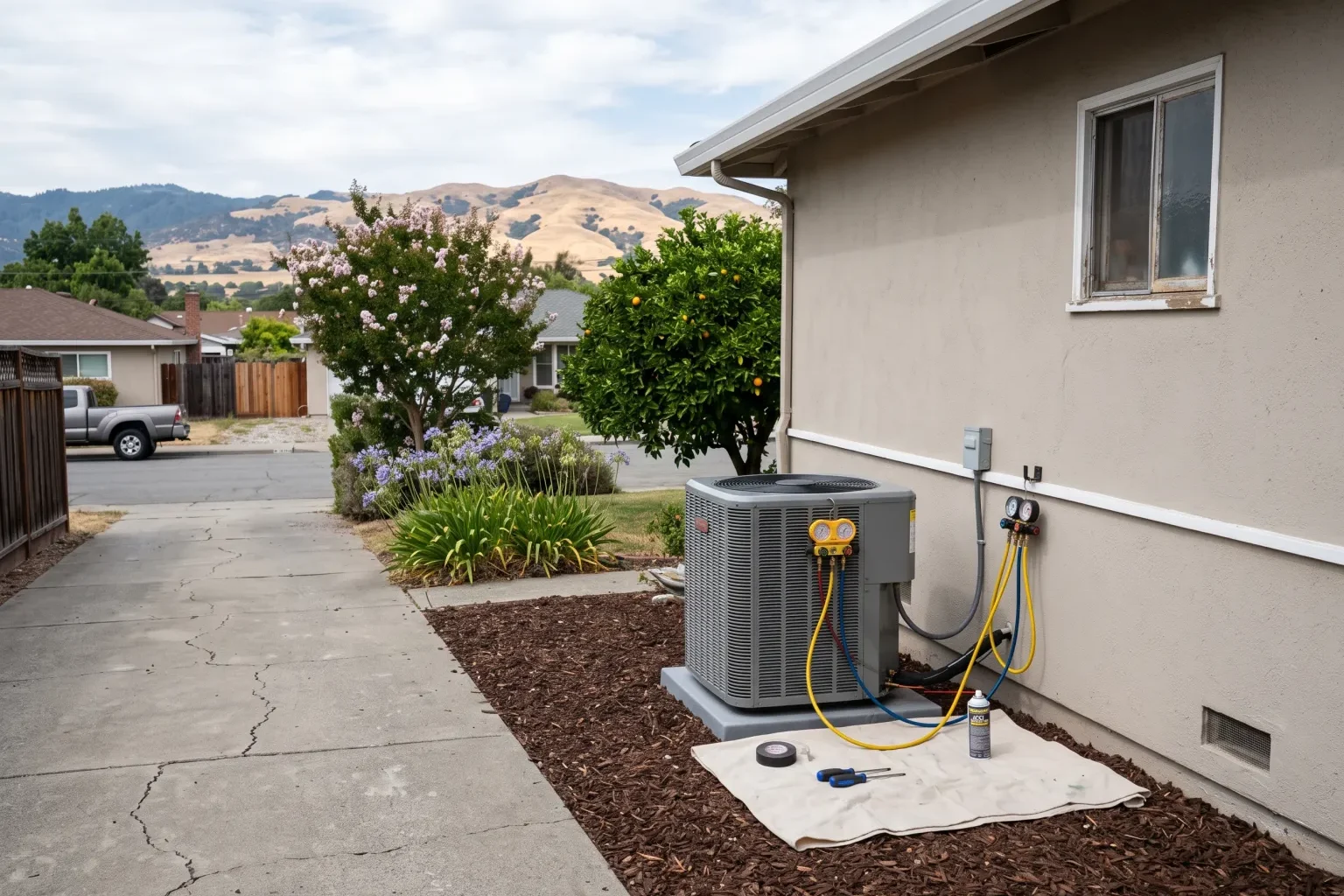
The short answer
Schedule HVAC maintenance once a year per system, ideally before summer for cooling and before winter for heating. A tune-up cleans and tests key components, checks safety controls and refrigerant, and flags parts that are wearing out so you can plan instead of react.
Heating and cooling equipment in the San Ramon Valley works in two distinct shifts. From late spring into early fall, the air conditioner or heat pump fights long, dry, hot afternoons that inland Contra Costa towns know well. Then, after a short break, the furnace or heat pump takes over for cool nights and damp winter mornings. Each handoff is a natural moment for a checkup. EliteFlow HVAC Repair Service offers scheduled maintenance for furnaces, central air conditioners, heat pumps and ductless systems in Danville, Alamo, San Ramon and nearby neighborhoods. A tune-up will not make a worn-out system new, but it catches small faults while they are still small, keeps efficiency from sliding, and gives you a realistic picture of how much life your equipment has left. Here is how to tell your system is overdue, what a visit covers, when maintenance stops being enough, what affects the cost and how the appointment runs.
Clues that your system is overdue for service
Plenty of homeowners only think about their HVAC system when it stops. By then, a dirty coil or a weak capacitor has often been dragging down performance for months. Dust, pollen and the dry-season grit common in inland valleys settle on outdoor coils and indoor filters faster than many people expect, and that buildup forces the equipment to work harder.
None of these signs necessarily means a repair is needed. They do mean the system would benefit from a technician's attention before the next heat wave or cold spell puts it under full load.
- It has been more than a year since anyone looked at the equipment
- Utility bills are climbing with no change in thermostat habits
- The air conditioner runs for long stretches on warm afternoons
- Dust collects quickly on furniture near supply registers
- Leaves, grass clippings or cottonwood fluff are packed against the outdoor unit
- You notice new sounds, such as humming, rattling or clicking at startup
- The condensate drain line has overflowed or the drain pan holds water
What a maintenance visit covers
Our tune-up is a hands-on inspection, not a quick glance. The checklist changes with the type of equipment, but the goal is the same: clean what affects efficiency, test what affects reliability and verify what affects safety.
For cooling equipment, that means rinsing the outdoor coil, checking refrigerant pressures and temperature split, testing the capacitor and contactor, and clearing the condensate drain. For gas furnaces, we inspect the burners and flame, test the igniter and flame sensor, confirm the safety switches trip correctly and check the venting. Heat pumps get both sets of checks plus a test of the reversing valve and defrost controls. Ductless systems get a cleaning of the indoor coil, filters and blower wheel, which is where most of their performance problems start.
- Filter check and replacement or cleaning
- Outdoor and indoor coil inspection and cleaning as needed
- Electrical connections, capacitors and contactors
- Blower motor, belt or wheel condition
- Refrigerant pressures and temperature readings
- Burner, ignition and flame sensor on gas systems
- Safety limit and rollout switch testing
- Condensate drain flushing
- Thermostat calibration and schedule review
When maintenance points to repair or replacement
Part of every visit is telling you what we found, good or bad. Most tune-ups end with a clean bill of health and maybe a minor adjustment. Sometimes we find a capacitor reading below spec, a corroded wire or a slow refrigerant leak. We will explain what we saw, how urgent it is and what a repair would involve, and you decide whether to address it now or keep an eye on it.
Occasionally, the inspection reveals that a system is near the end of its useful life, such as a furnace with heat exchanger corrosion or an air conditioner on its third refrigerant top-off. In those cases, we will talk through replacement timing, including heat pump options and how Bay Area Air District rules on gas furnaces manufactured from 2029 might factor in. Those rules do not require replacing working equipment, so maintenance remains a sound way to keep a healthy system running.
What affects the cost of HVAC maintenance
We quote maintenance based on your equipment rather than posting a one-size price. A single furnace takes less time than a home with a furnace, a central air conditioner and two ductless heads, and some installations are simply harder to reach.
Homes that have gone several seasons without service usually need more time on the first visit. Coils may need a deeper cleaning, drain lines can be packed with sludge, and filters may have been the wrong size for years. After that catch-up visit, regular yearly maintenance tends to be quicker because there is less buildup to deal with.
If a tune-up uncovers a needed repair, it is priced separately and only done with your approval.
- How many systems and indoor units are serviced
- Equipment type: furnace, air conditioner, heat pump or ductless
- Access to the attic, crawlspace or rooftop units
- How dirty the coils and drains are, especially if service has been skipped for years
- Specialty filters or media cartridges that need replacing
How a tune-up appointment runs
We schedule a window that suits you, and the technician checks in by phone before arriving. After a quick conversation about any concerns you have noticed, the technician works through the outdoor equipment, then the indoor unit, the filter and the thermostat. Most single-system visits take about an hour or so, longer for multi-system homes or heavily soiled coils.
Before leaving, the technician runs the system, confirms it is operating normally and gives you a summary of what was checked, cleaned and adjusted, along with any recommendations. Many homeowners pair a spring cooling visit with a fall heating visit so each system is ready before its busy season.