
The short answer
Installing AC in Walnut Creek usually means working with mid-century construction, limited attic space or flat roofs, and ducts that were never designed for cooling. We size the system from a load calculation, choose ducted or ductless equipment to suit the structure, and handle permits and testing.
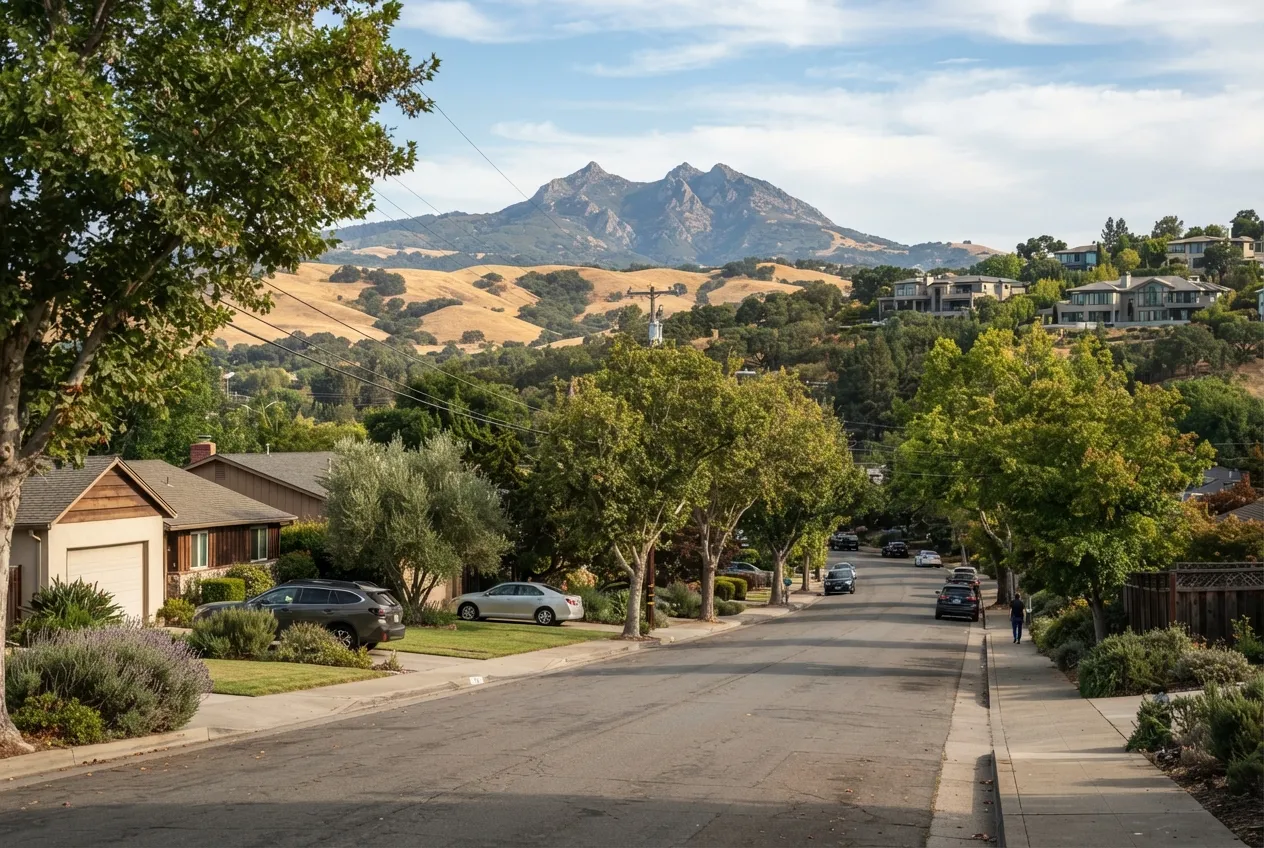
Walnut Creek covers a lot of ground, from older neighborhoods close to downtown to hillside homes on the edges of open space, and the four ZIP codes it spans (94595, 94596, 94597 and 94598) include almost every kind of house the East Bay builds. Many mid-century homes here were designed with gas heat and open windows in mind, then had air conditioning added decades later, sometimes without much thought about the ducts. Others are newer and already wired for central cooling. We travel about ten miles northwest from Danville to install new systems across the city, and our approach starts with understanding how your particular house gains heat on a hot Contra Costa afternoon.
Mid-Century Houses and Cooling Retrofits
A good share of Walnut Creek housing dates from the postwar decades. These homes often have low-slope or flat roofs, large panes of glass, open beam ceilings and minimal attic space. Some have heating ducts in the slab or crawlspace rather than overhead, and a few rely on radiant heat with no ducts at all.
Adding central air to a house like this takes planning. Ducts sized for a furnace are often too small for cooling, which needs more airflow. Slab ducts can be hard to inspect and may hold moisture. In homes with no usable attic, a ductless system or a compact ducted unit with carefully routed lines can deliver cooling without major remodeling. We explain what is realistic for your house and what each choice involves.
Heat Gain Is About More Than Square Feet
Two Walnut Creek homes of the same size can need very different equipment. A house with a wall of west-facing windows and a dark flat roof will gain heat far faster than a shaded home with an insulated attic. We measure and calculate rather than going by the size of the unit you already have.
That calculation accounts for:
- Window area, glass type and which direction each window faces
- Roof style, color and insulation, including flat and low-slope roofs
- Wall construction and any recent remodeling or additions
- Shading from trees, hillsides and neighboring buildings
- How many people use the home and when, plus heat from kitchens and home offices
- Duct location and whether ducts run through conditioned or unconditioned space
Ducted Versus Ductless in Walnut Creek
If your home has usable ductwork, a central air conditioner matched to the furnace, or a heat pump that replaces both, is often the cleanest option. We check the existing ducts for leaks, size problems and damage before reusing them, and recommend replacement or added returns where they are needed.
Where ducts are missing or impractical, ductless mini-splits can cool individual rooms or zones with an outdoor unit and small indoor heads. Multi-zone systems can serve several rooms from one outdoor unit. These systems also heat efficiently, which is useful in homes that currently rely on wall heaters or older radiant systems.
Heating Rules to Keep in Mind
Because cooling and heating share equipment, it helps to think ahead. Bay Area Air District Rule 9-4 requires gas furnaces manufactured from 2029 to meet a zero-NOx standard. The Air District rules do not require replacing working equipment; they apply when a furnace fails or is replaced. If your furnace is getting older, a heat pump installed now covers both cooling and future heating needs.
BayREN and your local clean energy provider may offer heat pump incentives, which we confirm before quoting. The federal 25C credit no longer applies to heat pumps placed in service after December 31, 2025.
Permit, Installation and Testing
We pull the permit from the City of Walnut Creek and schedule the inspection. On installation day, we protect floors, remove old equipment and recover refrigerant properly. Outdoor units are placed with attention to airflow, noise near bedrooms and neighbors, and the setbacks many hillside lots require.
After installation, we evacuate and charge the system, measure airflow and temperatures, test the condensate drain and set up the thermostat. Where state energy code requires duct leakage testing, we complete it so the job passes inspection without delay.
Around Walnut Creek
We also install cooling in Pleasant Hill, Lafayette, Concord, Moraga and Clayton, as well as throughout the San Ramon Valley closer to our Danville base.
More services in Walnut Creek
- AC Repair in Walnut CreekLocal service & repairs
- Heating Repair in Walnut CreekLocal service & repairs
- Heat Pump Installation in Walnut CreekLocal service & repairs
- Furnace Repair in Walnut CreekLocal service & repairs