
The short answer
Duct cleaning makes sense when an inspection shows real buildup, debris, pests or construction dust, not on a fixed schedule. We inspect first, clean with negative-pressure equipment and agitation tools, and point out duct leaks or damage that may matter more than the dust.
Ductwork is the part of a heating and cooling system almost nobody sees. It runs through attics, crawlspaces and wall cavities, carrying every bit of conditioned air in the house, and it collects whatever the filter misses. In the dry months around Danville, Alamo, Walnut Creek and Lafayette, fine dust and pollen find their way in; after a remodel, drywall and sawdust can coat the inside of the runs. EliteFlow HVAC Repair Service inspects ducts, cleans them when the inspection supports it, and fixes the leaks and damage we often uncover in the process. Here is how to tell whether yours need attention, what we look at, and how the work is done.
Clues that your ducts need a look
Ducts do not need cleaning every year, and a little dust on a register cover is normal. These signs suggest something more is going on inside:
- Visible dust or debris blowing out of registers when the blower starts
- Grey buildup on the return grille or around supply vents shortly after cleaning them
- Recent remodeling, sanding or drywall work while the system was running
- Signs of rodents or insects in the attic or crawlspace near duct runs
- A musty smell when heat or cooling first comes on
- Filters that load up with dust much faster than they used to
- Moving into a home where you have no idea when the ducts were last checked
What we inspect
Before recommending any cleaning, we want to know what is actually inside the system. We remove a few registers and the return grille, look into the runs with a camera where we can reach, and check the plenums on either side of the furnace or air handler.
We also look at the ducts from the outside. In many homes built several decades ago, flex duct in the attic has sagged, kinked or pulled loose at a joint, and metal trunk lines may have gaps at the seams. A disconnected duct dumps conditioned air into the attic and pulls dusty air back through the return, which is often the real reason a house feels dusty. In older homes with ducts in a crawlspace, we check for moisture, damaged insulation and openings where animals could get in.
Finally, we look at the blower wheel and the indoor coil. Dust on these parts cuts airflow and efficiency, and cleaning the ducts without addressing them leaves part of the problem behind.
Clean, repair or replace the ducts
What we find usually points to one of three paths. If the ducts are sound but dirty, a thorough cleaning is the answer. If they are mostly sound but leaking, we seal joints and reconnect or replace damaged sections, sometimes alongside a cleaning. If large portions are crushed, brittle, poorly insulated or badly undersized, replacing the runs can do more for comfort and air quality than cleaning ever could.
We will tell you honestly when cleaning is not worth doing. Clean, well-sealed ducts with a good filter rarely need more than an occasional check. In those homes, upgrading filtration or fixing a leaky return usually delivers more benefit.
Why ductwork matters more than most people think
Every cubic foot of air your furnace heats or your air conditioner cools has to travel through the ducts before it reaches a room. When those runs leak into an attic that bakes in the summer sun or a crawlspace that stays damp through winter, the system loses part of its effort before the air ever arrives. The return side is just as important: a leak there can draw in insulation fibers, dust and crawlspace odors and spread them through the house.
That is why we treat a duct visit as more than a cleaning. Homes in the San Ramon Valley range from mid-century ranch houses with ducts patched over several owners to newer two-story homes where long runs feed an upstairs that never quite cools. In both, a few disconnected or crushed sections can explain hot bedrooms, dusty furniture and a system that seems to run constantly.
If you are thinking about a heat pump in the future, the condition of the ducts matters too. Heat pumps tend to move air more steadily and at lower supply temperatures than a furnace, so leaky or undersized ducts show up more clearly. Sorting them out now means any new equipment can do its job properly.
Factors that affect the cost
We quote after the inspection, because the scope varies from house to house:
- The number of supply and return registers and the total length of duct
- Whether runs are rigid metal, duct board or flexible duct, since each is cleaned differently
- Access: a roomy attic versus a shallow crawlspace
- How much debris, construction dust or pest material needs to be removed
- Any sealing, reconnecting or section replacement found during the work
- Whether the blower and coil also need cleaning
How a duct cleaning visit works
We start with the inspection and show you photos or camera footage of what we see, along with our recommendation. If you decide to go ahead, we protect floors and furniture near each register and shut down the system.
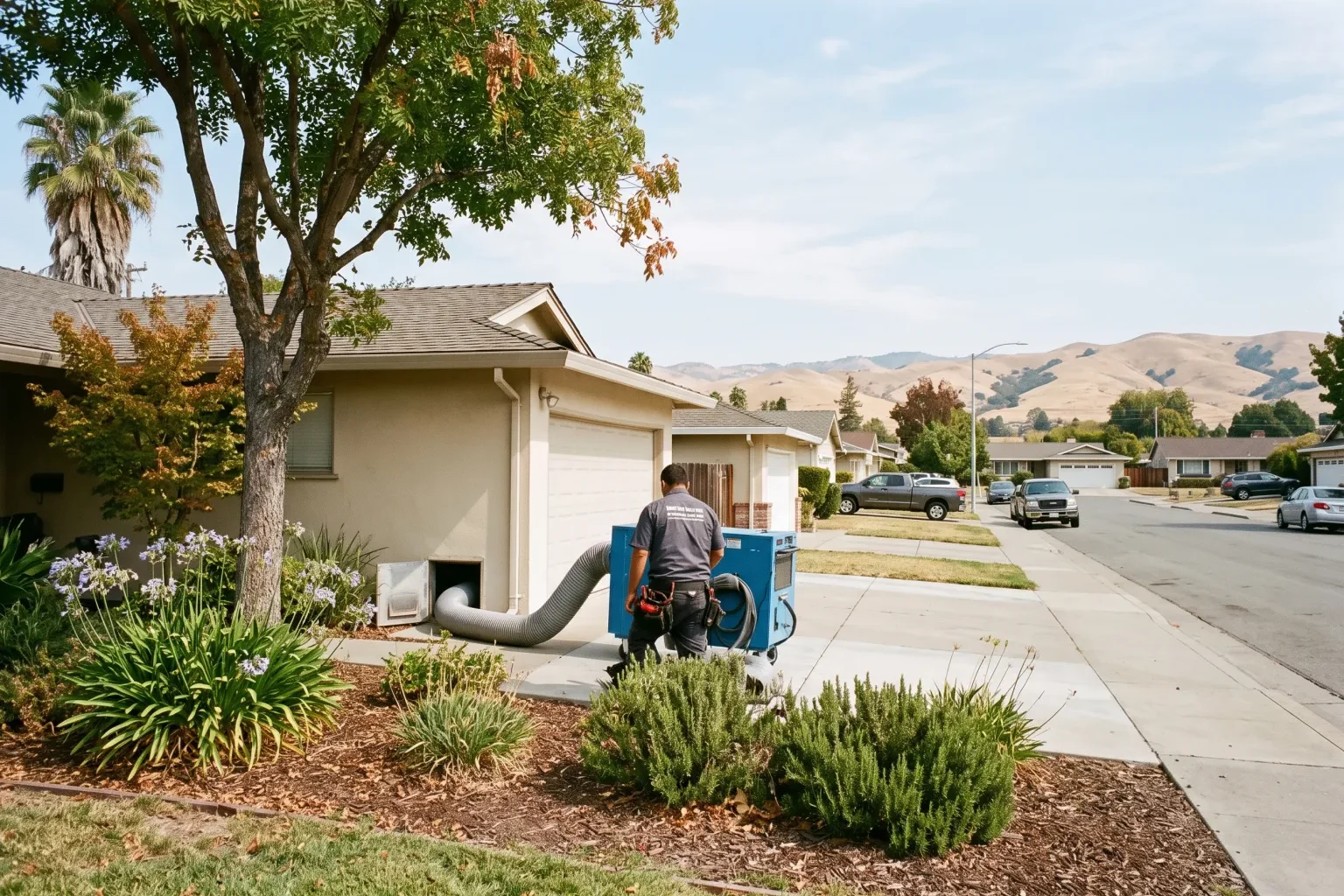
The cleaning itself uses a powerful vacuum connected to the trunk line to keep the ducts under negative pressure, so loosened dust is pulled out instead of spreading into rooms. We work through each branch with rotating brushes or air whips to break buildup free, then clean the registers and grilles. When it is included, we also clean the blower assembly and accessible coil surfaces.
Once the ducts are clean, we seal any leaks found, install a fresh filter and restart the system to confirm airflow at the registers. You get a summary of the work, the condition of the ductwork, and suggestions on filter type and replacement timing to keep it clean longer.