
The short answer
Installing AC in a Lafayette home often means adding cooling to a house that never had it. We check whether existing furnace ducts can carry cool air, plan equipment placement on sloped or wooded lots, size the system properly and handle the permit.
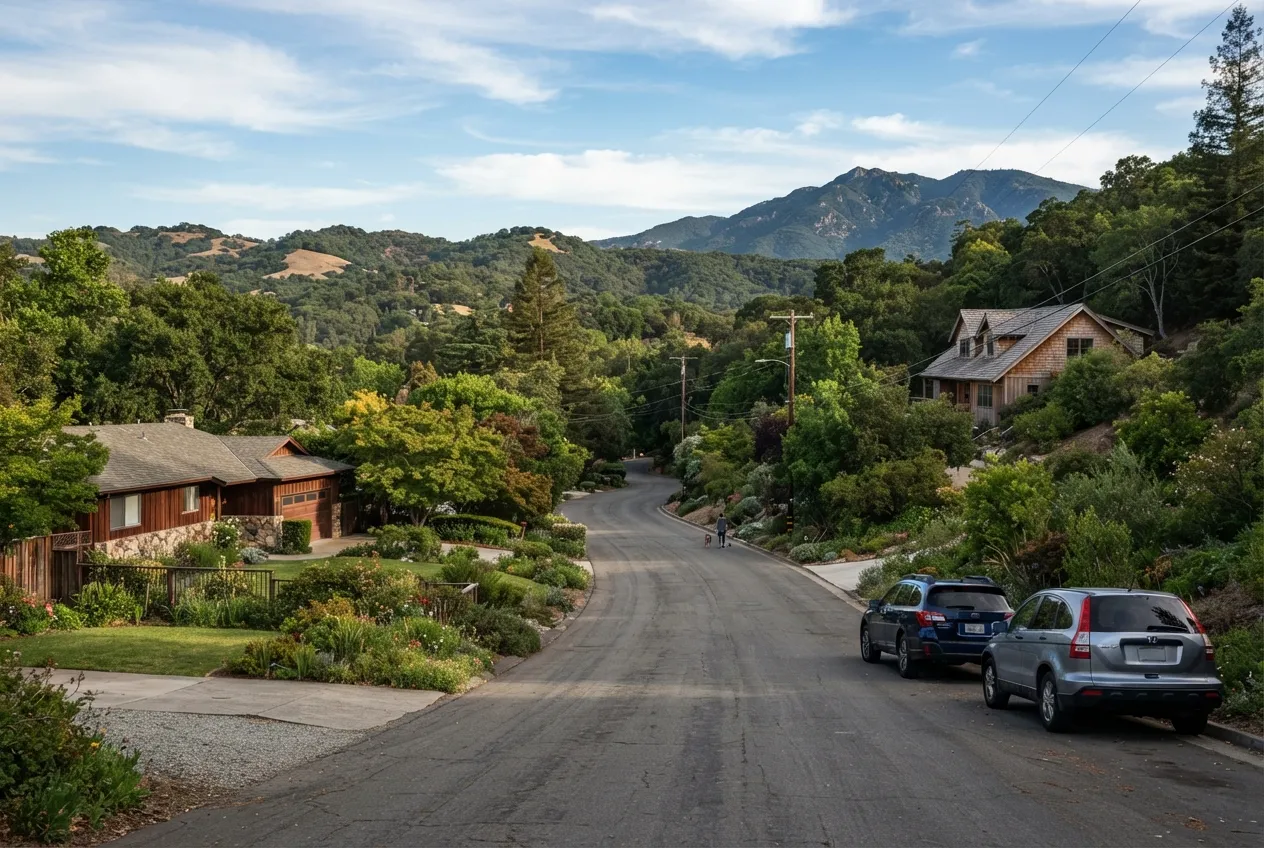
Lafayette sits between the Oakland hills and Walnut Creek, and its summers are warmer than many people expect from a town so close to the Bay. Afternoons in the 94549 hills and canyons can get properly hot, while evenings cool off quickly. A lot of Lafayette homes were built when central air was considered optional, so a good number of our installation calls here are first-time systems rather than straight swaps. EliteFlow HVAC Repair Service handles both, traveling about 13 miles northwest from Danville. This page covers the particular challenges of adding or replacing AC in Lafayette: older construction, sloped lots, tight crawlspaces and mature trees.
Adding AC to a house that never had it
If your home has a gas furnace and ducts but no air conditioning, adding a coil and outdoor unit is usually possible. The question is whether the ductwork is up to the job. Ducts sized only for heating are often smaller than cooling needs, because cooling requires more airflow. They may also run through a crawlspace or attic without insulation, which is a bigger problem when the air inside is cold.
We measure the existing ducts, look at the furnace blower's capacity, and run a load calculation before recommending a size. In some homes a few duct changes and a larger return are enough. In others, especially where the ducts are original and fragile, it makes more sense to replace sections or choose a different approach.
Homes with no ducts at all
Some older Lafayette houses heat with wall heaters, a floor furnace or radiant heat, so there are no ducts to work with. For these homes, ductless mini-split systems are often the most practical way to add cooling. Small indoor heads are mounted on walls or ceilings in the rooms that need them, connected to an outdoor unit by a narrow line set.
Because a mini-split is a heat pump, it also heats, which can let you retire an aging wall heater at the same time. Under Bay Area Air District Rule 9-4, gas furnaces manufactured from 2029 must meet a zero-NOx standard, which in practice points toward heat pumps for replacements after that date. Nothing requires you to remove working heaters, so this is simply an option worth weighing.
Placement on hillside and wooded lots
Lafayette lots are rarely flat and empty. The outdoor unit has to sit somewhere level, with clearance for airflow and service, and ideally away from bedroom windows and the neighbor's patio. On a slope, that may mean a pad built into the hillside or a wall bracket. Under oaks and other large trees, leaves and debris collect on coils, so we look for a spot that limits buildup and leave enough room to clean around the unit.
Line set routes matter too. Running refrigerant lines and wiring through a crawlspace, up an exterior wall or into an attic needs careful planning to keep the work neat and protected.
- Level, stable mounting on a pad or bracket
- Clearance on all sides for airflow and service access
- Distance from bedrooms, decks and property lines for quieter operation
- Protection from falling leaves and runoff
- A clean, protected path for refrigerant lines and wiring
Our installation process
Once you approve the plan, we file the permit and schedule the work. On installation day, the crew protects floors and finished surfaces, installs or replaces the indoor coil or air handler, sets the outdoor unit, and runs the line set and electrical. For first-time systems, we add a dedicated circuit and a disconnect near the outdoor unit.
The refrigerant system is pressure tested and evacuated before charging. Then we verify airflow at each register, measure temperature drop across the coil, and confirm the condensate drain works with a safety switch in place. Before leaving, we walk you through the thermostat and filter and leave model numbers and filter size where you can find them.
Sizing for Lafayette's warm days and cool nights
Because Lafayette evenings often cool down well, an oversized system is a common mistake. It cools the house quickly in the afternoon, shuts off, and never runs long enough to pull humidity out of the air or even out temperatures between rooms. A properly sized system, often a two-stage or variable-speed unit, runs longer at lower output and keeps the house more even. Our load calculation considers insulation, windows, shading from trees and hills, and how each room is used. We serve Moraga, Walnut Creek and Pleasant Hill the same way.
More services in Lafayette
- AC Repair in LafayetteLocal service & repairs
- Heating Repair in LafayetteLocal service & repairs
- Heat Pump Installation in LafayetteLocal service & repairs
- Furnace Repair in LafayetteLocal service & repairs