
The short answer
A heat pump is worth considering when your air conditioner or furnace is aging, you want one system for heating and cooling, or you are planning ahead for Bay Area Air District rules on gas furnaces. We check the electrical service, ducts and home's heat load before recommending a size and type.
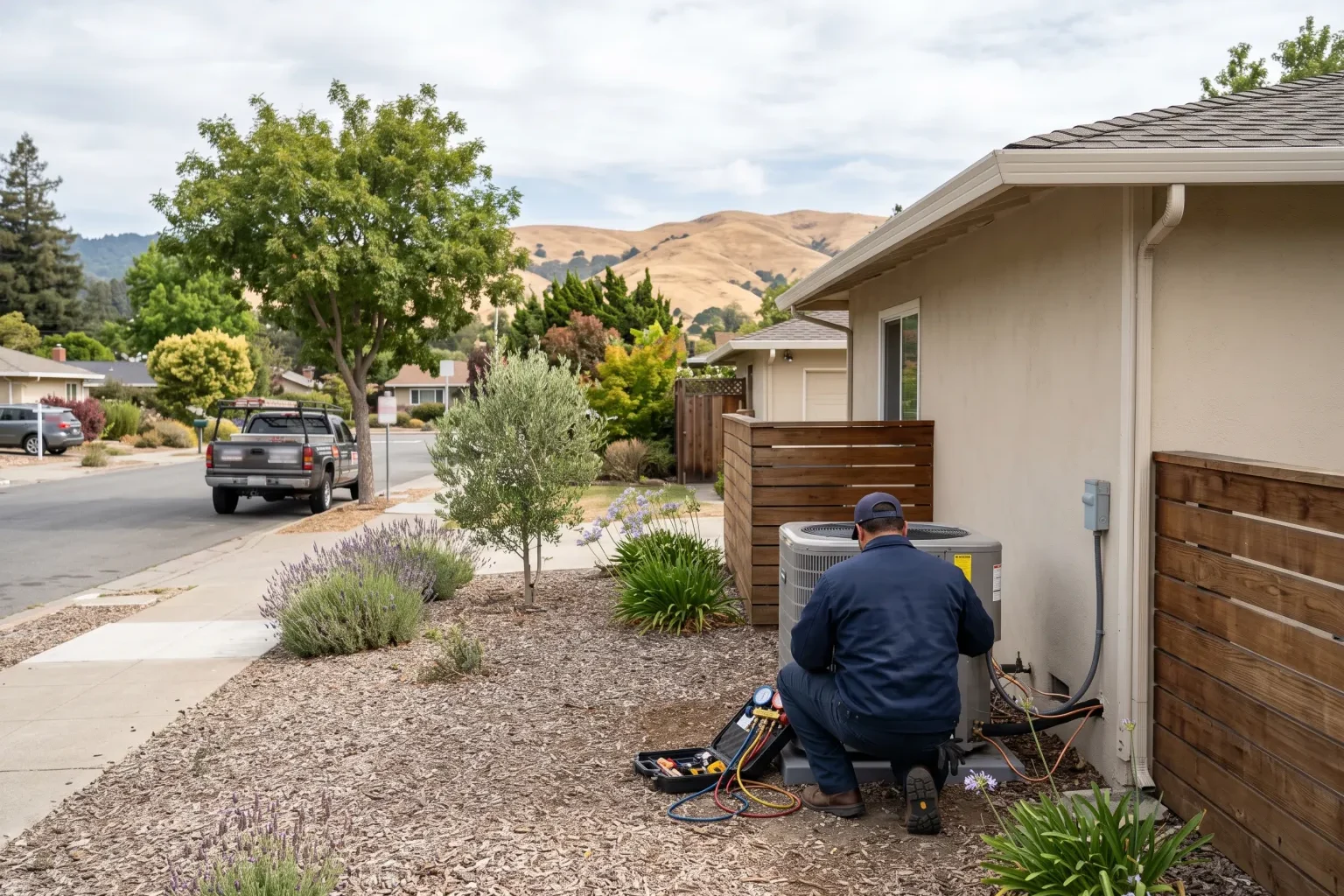
A heat pump handles both seasons with one outdoor unit: it pulls heat out of the house during hot inland summers and moves heat in when winter nights turn chilly. For many Danville homeowners, the question is no longer whether heat pumps work in this climate, since the mild winters here suit them well, but when the switch makes sense for their particular house. EliteFlow HVAC Repair Service designs and installs ducted heat pumps, hybrid systems that pair a heat pump with a gas furnace, and ductless options for homes in Danville, San Ramon, Alamo, Walnut Creek and the surrounding area. This page walks through the situations that point toward a heat pump, what we inspect before designing a system, how replacing compares with repairing current equipment, what affects the scope of the project and what happens during the installation itself.
Situations that make a heat pump the logical next step
The most common trigger is an air conditioner that is failing. Because a heat pump is essentially an air conditioner that can also run in reverse, replacing an old AC with a heat pump adds heating capability for a modest change in scope. Many homeowners then let the gas furnace serve as backup, or retire it entirely.
Policy is another factor. Bay Area Air District Rule 9-4 sets a zero-NOx emission standard for natural gas furnaces manufactured from 2029, which in practice points homeowners toward heat pumps when a furnace is replaced after that date. Nobody is required to tear out working equipment; the rules apply only when a furnace fails or is replaced. Still, homeowners whose systems are already aging often prefer to make the change on their own schedule rather than during an emergency.
- Your central air conditioner is old, inefficient or needs a costly repair
- Your furnace and AC are both nearing the end of their service life
- You have rooftop solar or plan to add it and want to use more of that power at home
- You are remodeling or adding square footage and need new equipment anyway
- You want to reduce gas use in the house over the next few years
- Comfort is uneven and you are ready to rethink the whole system
Our pre-installation assessment
Heat pumps reward careful design. They tend to deliver steadier, gentler heat than a gas furnace, so sizing and airflow matter more. We run a load calculation that accounts for insulation, windows, orientation and the hot afternoons typical of the San Ramon Valley, since cooling demand often drives the size here more than heating does.
Electrical capacity is the other key check. Some older panels in the area were not built with a large heat pump, an electric vehicle charger and an induction range in mind. We look at the panel rating and available breaker space so there are no surprises later.
- Heating and cooling load for the whole home
- Electrical panel size, breaker space and wiring to the outdoor location
- Existing duct size, leakage and return air capacity
- Indoor air handler or furnace location and condition
- Outdoor unit placement for airflow, sound and access
- Thermostat compatibility with variable-speed equipment
- Condensate drainage in both heating and cooling modes
Replacing equipment versus repairing what you have
If your current air conditioner or furnace is in decent shape, repairing it is a perfectly reasonable choice, and we will say so. A heat pump does not have to be installed the day something breaks. That said, pouring repair money into a system that is already well past its prime can mean paying twice: once for the fix and again for the replacement a season or two later.
For homeowners who want a middle path, a dual-fuel setup keeps a working gas furnace as backup while the heat pump handles most of the heating load. Others go all-electric from the start. For existing heat pumps that are struggling, we diagnose the reversing valve, defrost controls, refrigerant charge and compressor before recommending repair or replacement, because many heat pump problems are fixable.
What shapes the scope of a heat pump project
We give a written quote once we have seen the house, so you will not find dollar figures here. The main variables are the type of system, how much of the existing setup can be reused and whether the electrical service needs work.
Incentives can change the math, but they move. BayREN and local clean energy providers sometimes offer heat pump and electrification incentives, and amounts and availability change by funding cycle, so we confirm the current offer before quoting it. The federal 25C credit covered qualifying heat pumps placed in service before December 31, 2025, and is not available for installations after that date.
- Ducted, ductless or hybrid dual-fuel configuration
- Single-stage, two-stage or variable-speed inverter compressor
- Whether the existing air handler or furnace can be kept
- Electrical panel upgrade or new circuit requirements
- Duct modifications, sealing or added returns
- Line set replacement versus reuse
- Permit and inspection requirements in your city
From quote to first cycle: how installation works
Once you approve the plan, we schedule the work and pull any required permit. On installation day, the crew protects the work area, recovers refrigerant from the old system and removes it. The new outdoor unit is set on a level pad, the indoor coil or air handler is installed, and new or flushed refrigerant lines are connected. Lines are pressure tested and evacuated before the system is charged.
Commissioning is where heat pumps differ most from older equipment. We confirm airflow, verify refrigerant charge in both heating and cooling, test defrost operation and set the thermostat so the heat pump and any backup heat work together properly. Finally, we show you how the system behaves differently from a furnace, such as longer, quieter run times and occasional defrost cycles, so nothing catches you off guard on the first cold morning.
Heat Pump Installation by city
- Heat Pump Installation in San RamonLocal service & repairs
- Heat Pump Installation in DublinLocal service & repairs
- Heat Pump Installation in PleasantonLocal service & repairs
- Heat Pump Installation in ClaytonLocal service & repairs
- Heat Pump Installation in Walnut CreekLocal service & repairs
- Heat Pump Installation in LivermoreLocal service & repairs
- Heat Pump Installation in MoragaLocal service & repairs
- Heat Pump Installation in LafayetteLocal service & repairs
- Heat Pump Installation in ConcordLocal service & repairs
- Heat Pump Installation in AntiochLocal service & repairs
- Heat Pump Installation in Pleasant HillLocal service & repairs
- Heat Pump Installation in BrentwoodLocal service & repairs