
The short answer
Heat pumps work well in Pleasanton because winters are mild and summers demand strong cooling. A good install depends on correct sizing, a duct and electrical check, and careful setup, and future Air District furnace rules make it a sensible option to plan around.
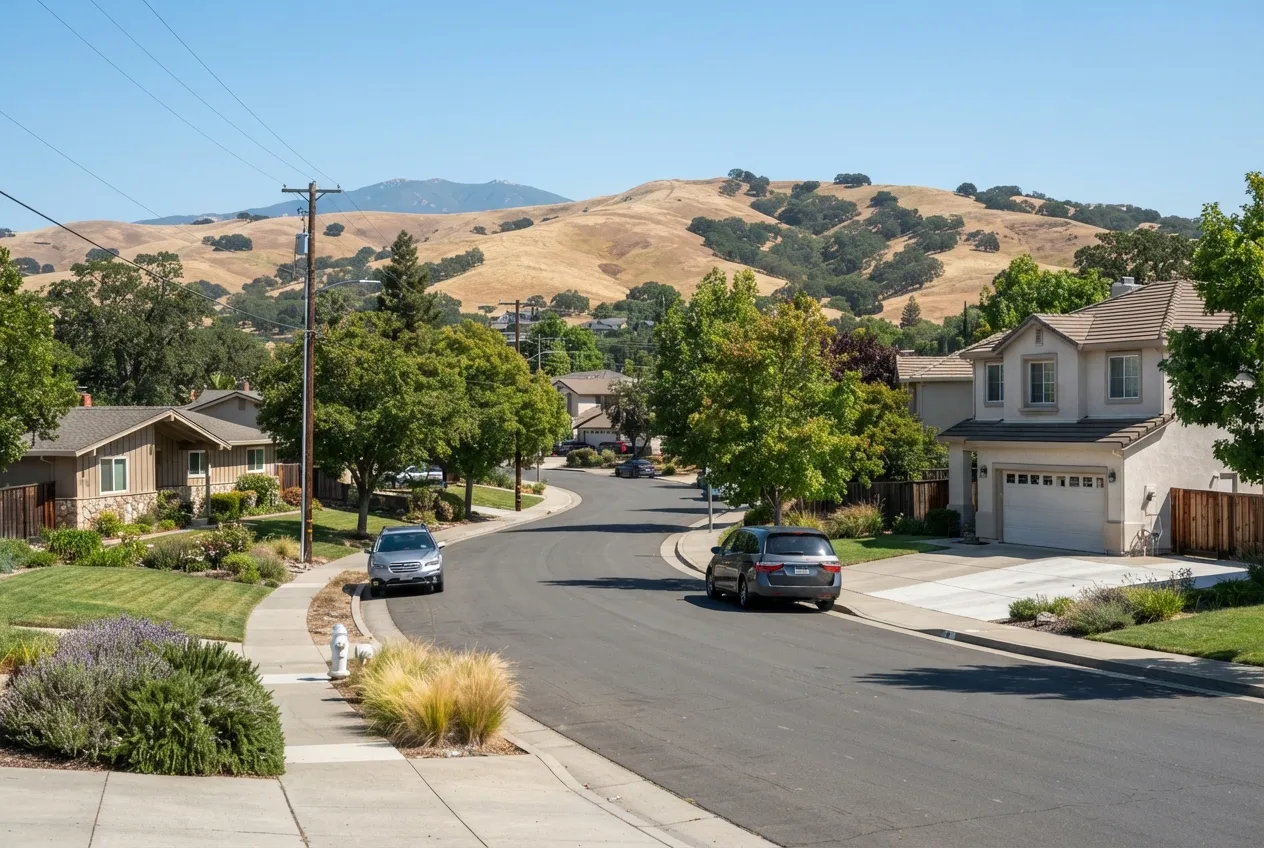
More Pleasanton homeowners are asking a simple question: if one outdoor unit can cool the house in July and warm it in January, why keep two separate systems? A heat pump does exactly that, moving heat out of the home in summer and pulling it in from outdoor air in winter. The Amador Valley climate, with hot dry summers and cool but rarely severe winters, suits the technology well. From our base in Danville, roughly nine miles to the north, we plan and install ducted heat pumps and ductless systems for houses across 94566 and 94588, including many that are switching away from an older gas furnace.
Why the Valley Climate Favors Heat Pumps
Modern heat pumps keep producing heat well below the coldest temperatures Pleasanton typically sees on winter nights. That means most homes here do not need a large backup heat source running often. In summer, the same equipment works as a high-efficiency air conditioner, which matters on the long, dry afternoons that inland Tri-Valley towns get.
Because one machine covers both seasons, sizing has to balance the cooling load and the heating load. In this area, cooling usually drives the decision, so we pay close attention to sun exposure, attic heat and window area.
Where Air District Rules Fit In
Bay Area Air District Rule 9-4 requires natural gas furnaces manufactured from 2029 to meet a zero-NOx emission standard. In practice, that steers replacement decisions after that date toward heat pumps. The rule does not require anyone to remove working equipment; it applies when a furnace fails or is replaced.
Some Pleasanton owners choose to switch now, while their old furnace still runs, so they can plan the project on their own schedule rather than during a winter breakdown. Others wait. We are glad to lay out both paths.
Our Pre-Install Checklist
A heat pump is only as good as the house around it. Before quoting equipment, we go through the home with these points in mind:
- A room-by-room heating and cooling load calculation based on your actual windows, insulation and layout
- Duct size and condition, since heat pumps deliver gentler, longer-running airflow than a furnace
- Electrical panel capacity for the outdoor unit and any backup heat strip
- Outdoor unit placement with clearance for airflow, defrost drainage and quiet operation near bedrooms
- Thermostat compatibility, including settings that avoid unnecessary use of backup heat
- Whether a ductless head or two would serve an addition or converted garage better than extending ducts
Ducted, Ductless or Hybrid
Homes that already have a central furnace and reasonable ductwork usually get a ducted heat pump with a matched air handler. Where a gas furnace is fairly new, a dual-fuel setup pairs a heat pump with the existing furnace, letting the heat pump carry most of the load and the furnace take over only on the coldest nights.
For houses without ducts, or where parts of the home were never well served, ductless mini-splits place individual indoor units in specific rooms. Each approach has trade-offs in appearance, zoning and cost, and we explain them so you can choose what fits.
Incentives and the End of 25C
The federal Energy Efficient Home Improvement Credit, known as 25C, applied to qualifying heat pumps placed in service before December 31, 2025. It is not available for new installations after that date, so it should not be part of current planning.
Bay Area homeowners can still check BayREN and their local clean energy provider for heat pump and electrification incentives. Amounts and availability change with each funding cycle, so we confirm the current offer before including it in a proposal.
After the Install
We commission each system by checking refrigerant charge, airflow, defrost operation and thermostat settings, then show you how to use it. Heat pumps run longer at lower output than furnaces, and the house feels steadier as a result. We also install heat pumps in Dublin, Livermore, San Ramon, Walnut Creek and Moraga.
More services in Pleasanton
- AC Repair in PleasantonLocal service & repairs
- Heating Repair in PleasantonLocal service & repairs
- AC Installation in PleasantonLocal service & repairs
- Furnace Repair in PleasantonLocal service & repairs