
The short answer
Lafayette AC problems often come from debris-clogged outdoor coils, worn capacitors and contactors, refrigerant leaks, clogged drains and duct issues in older crawlspaces. We diagnose with measurements, explain the cause and repair only what you approve.
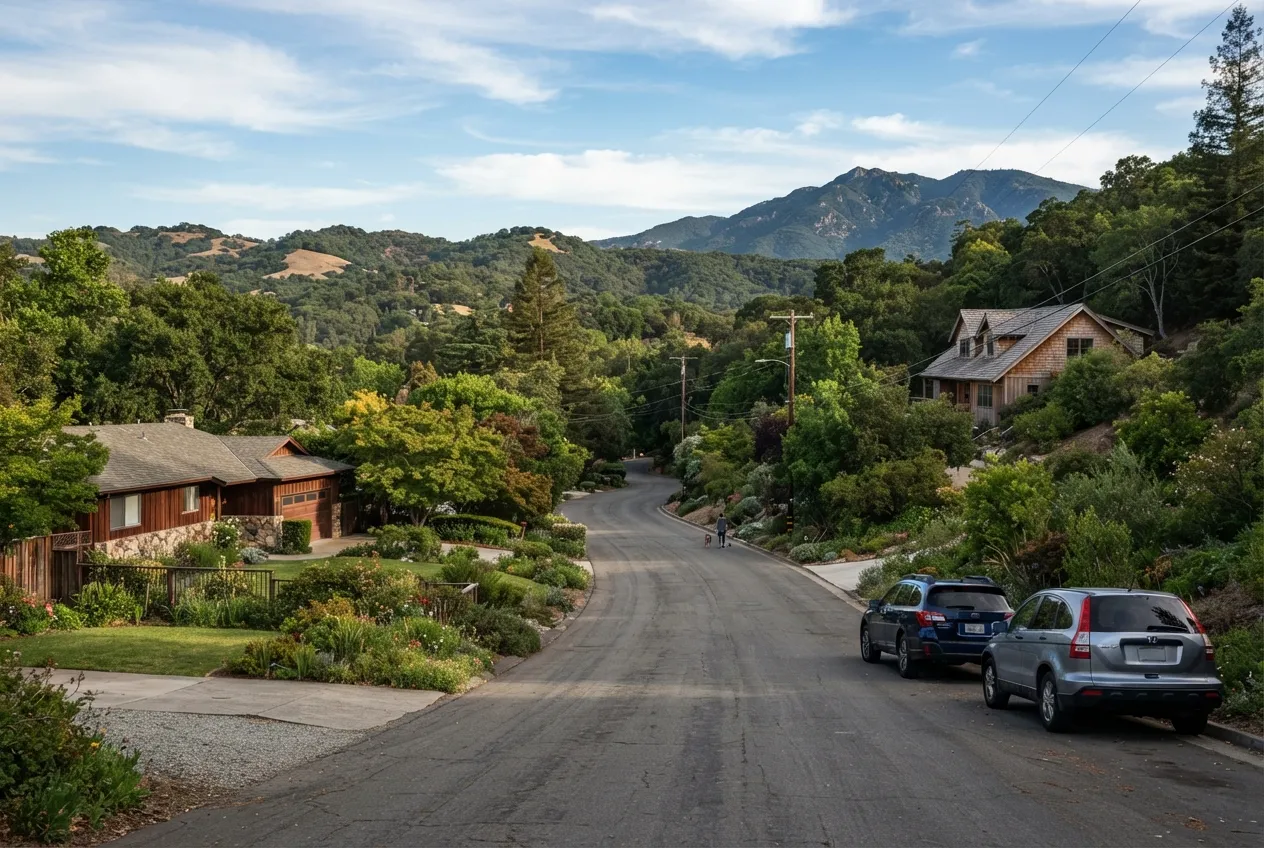
Lafayette air conditioners live a different life from those on the open valley floor. Many sit under oaks and sycamores that shed leaves, pollen and seed pods onto the coil. Others are tucked into a side yard on a slope, where runoff and debris collect at the base. Inside, ducts often run through tight crawlspaces or older attics. EliteFlow HVAC Repair Service repairs central air and ductless systems across 94549 and makes the drive about 13 miles northwest from Danville. Here is how we approach AC repair in Lafayette homes, organized around the questions people ask us most when their cooling stops.
Is it the equipment or the house?
Before replacing anything, we figure out whether the air conditioner itself has failed or whether something around it is the real problem. That distinction saves money.
If the outdoor unit runs and the air at the vents is cold but the house still feels warm, the issue may be ducts that leak into a crawlspace or attic, a return that is too small, or rooms that were never part of the original duct design. If the air at the vents is not cold, or the outdoor unit is not running, we focus on the equipment: electrical parts, refrigerant charge, coils and fans.
Trees, leaves and the outdoor coil
Lafayette's tree cover is beautiful and hard on condensers. Leaves and seed pods collect in the top grille and around the base, and fine pollen coats the coil fins. A blocked coil cannot reject heat, so the compressor runs at higher pressure and temperature, the system cools less, and parts wear faster.
During a repair we clean the coil from the inside out when it is dirty, straighten bent fins, clear debris from the base and check that drainage around the pad is not trapping water. If the unit sits directly under a heavy shedder, we may suggest small changes that make seasonal cleaning easier.
Parts we test and replace
When the problem is in the equipment, these are the components we check first, because they account for most summer failures.
- Run and start capacitors, which weaken with heat and age.
- Contactors, the switch that powers the compressor and fan, which can pit, stick or burn.
- Condenser fan motors and blower motors.
- Refrigerant pressures and temperatures, to identify low charge or restrictions.
- Evaporator coils, line sets and service valves for leaks.
- Condensate drains, pans and float switches.
- Thermostats and low-voltage wiring, including connections chewed by rodents in crawlspaces.
How we handle refrigerant leaks
Low refrigerant always means a leak; air conditioners do not use up refrigerant. Adding more without finding the leak is a temporary fix that tends to repeat. We use electronic leak detection, bubble solution and pressure testing to locate the source, then explain the options.
Some leaks are at accessible fittings or valves and can be repaired directly. Others are in the indoor coil, which may need replacement. On an older system, we will give you an honest comparison of fixing the leak against replacing the system.
Crawlspaces and older ductwork
Many Lafayette homes have ducts running under the floor in a crawlspace. Over time these can separate at joints, lose insulation, get crushed or become damaged by animals. Cold air that escapes into the crawlspace never reaches the rooms, and the system runs longer trying to keep up.
If our airflow measurements suggest duct problems, we inspect the crawlspace and attic connections. Reconnecting and sealing a few key runs can make a noticeable difference in comfort without touching the equipment.
Repair, or plan a replacement?
We repair systems that are worth repairing. When a compressor fails or the system is old and leaking, we lay out the numbers so you can decide. If your furnace is also aging, it may be worth considering a heat pump, which cools like an AC and also heats. Under Bay Area Air District Rule 9-4, gas furnaces manufactured from 2029 must meet a zero-NOx standard, which in practice points toward heat pumps when a furnace is replaced after that date. The rules do not require replacing working equipment. We also serve Moraga, Walnut Creek and Pleasant Hill.
More services in Lafayette
- Heating Repair in LafayetteLocal service & repairs
- Heat Pump Installation in LafayetteLocal service & repairs
- AC Installation in LafayetteLocal service & repairs
- Furnace Repair in LafayetteLocal service & repairs